

Introduction
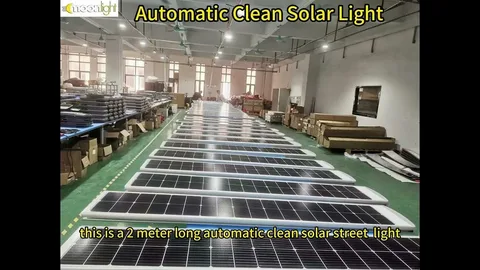
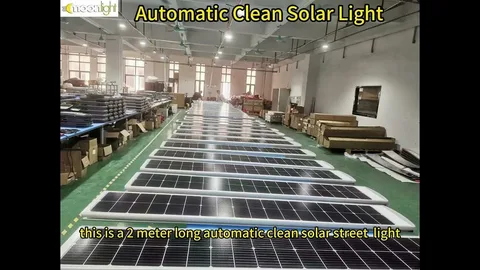
Urban infrastructure is evolving rapidly as cities strive to become smarter, cleaner, and more energy-efficient. Among the many innovations transforming public spaces, the concept of a self cleaning street lamp has gained significant attention. Traditional street lighting systems often suffer from dust accumulation, pollution deposits, bird droppings, and environmental debris that reduce illumination efficiency and increase maintenance costs. This has led researchers, engineers, and municipalities to explore whether a dust resistant lamp project exists that can minimize manual cleaning and improve long-term performance. In this comprehensive guide, we will explore the latest self cleaning street lamp research, existing technologies, real-world applications, challenges, and future prospects of dust-resistant street lighting systems.
The Need for Self Cleaning Street Lamps
Street lamps are critical components of urban safety, road visibility, and public security. However, in densely populated and polluted regions, dust and airborne particles accumulate quickly on lamp covers. Cities such as Beijing and New Delhi experience high levels of particulate matter, which significantly impacts outdoor lighting efficiency. When dust covers LED lenses or protective glass, light output can decrease by 20–40%, resulting in reduced brightness and increased energy waste. Municipalities then spend large budgets on maintenance crews, cleaning operations, and equipment rentals. This has fueled research into dust resistant lamp project models that can operate with minimal human intervention while maintaining optimal performance.
Understanding the Concept of Self Cleaning Technology
Self-cleaning technology is not entirely new. It has been widely used in solar panels, building glass, and vehicle windshields. The same principle is now being applied to street lighting systems. A self cleaning street lamp typically incorporates one or more of the following mechanisms: hydrophobic coatings, electrostatic dust repulsion, mechanical wipers, compressed air systems, or vibration-based cleaning methods. The goal is to prevent dust adhesion or automatically remove particles without manual cleaning. Many research institutions and technology companies are actively exploring dust resistant lamp project solutions that integrate these mechanisms into LED-based smart street lights.
How Dust Impacts Street Lighting Efficiency

Dust accumulation affects both optical clarity and heat dissipation. Modern LED lamps rely on transparent protective covers for light distribution. When dust settles on these covers, it scatters light unevenly, reducing visibility and increasing glare. Moreover, dirt layers can trap heat, potentially shortening LED lifespan. In industrial cities like Karachi, coastal humidity combined with dust and salt particles accelerates grime buildup. This environmental challenge strengthens the case for advanced self cleaning street lamp research focused on durability and resilience.
Existing Self Cleaning Street Lamp Projects
Yes, a dust resistant lamp project does exist in various forms around the world. Several universities and startups have prototyped automated cleaning streetlights integrated with smart city infrastructure. For example, research initiatives supported by Massachusetts Institute of Technology have explored nanocoatings that repel dust and water. Similarly, technology trials in Dubai have tested smart street poles equipped with sensor-based maintenance alerts. While not all are fully commercialized, pilot projects confirm that the concept is both feasible and scalable.
Hydrophobic and Nano-Coating Solutions
One of the most promising dust resistant lamp project technologies involves hydrophobic nano-coatings. These coatings create a microscopic surface structure that repels water and dust particles. When rain falls, it naturally washes away dirt from the lamp surface. This technology has been adapted from self-cleaning glass applications and solar panel coatings. Research laboratories worldwide are studying how to enhance durability so that coatings last 5–10 years without reapplication. The advantage of this approach is that it requires no mechanical components, reducing maintenance complexity.
Electrostatic Dust Repulsion Technology
Electrostatic cleaning systems are another innovation emerging in self cleaning street lamp research. These systems generate small electric charges that repel dust particles before they settle. Similar technology has been studied for solar farms in desert regions like Sahara Desert, where dust accumulation severely reduces solar efficiency. Applying this principle to street lamps could significantly reduce cleaning frequency in arid climates.
Mechanical Self Cleaning Mechanisms
Some dust resistant lamp project designs incorporate mechanical wipers or rotating brushes. These systems operate periodically, removing debris from the lamp surface. Although effective, they require power and moving components that may wear out over time. Researchers are working to design low-energy motors that operate only when sensors detect reduced light output. Mechanical systems are more common in prototype models rather than large-scale deployments due to maintenance concerns.
Integration with Smart City Infrastructure
Modern street lamps are no longer simple lighting fixtures. They are becoming multifunctional smart poles equipped with Wi-Fi transmitters, environmental sensors, CCTV cameras, and EV charging ports. Cities like Singapore have pioneered smart lighting networks that monitor energy usage and environmental data. Incorporating self-cleaning mechanisms into these systems enhances long-term sustainability and reduces operational costs. A dust resistant lamp project integrated with IoT sensors can automatically alert maintenance teams when cleaning is required, optimizing municipal budgets.
Solar Powered Self Cleaning Street Lamps
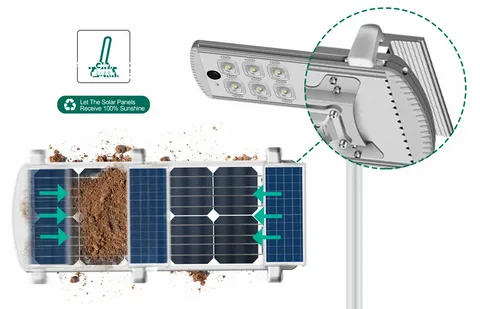
Solar-powered street lights are particularly vulnerable to dust because both the solar panel and the lamp surface require clarity for optimal performance. In desert regions and rural areas, cleaning solar panels is labor-intensive. Researchers are developing combined solar and self cleaning street lamp systems that use vibration or air-blowing mechanisms to clean both the solar panel and the lamp cover simultaneously. This integrated approach is gaining popularity in off-grid installations.
Cost-Benefit Analysis of Self Cleaning Street Lamps

Implementing a dust resistant lamp project requires higher initial investment compared to traditional street lights. However, long-term savings in maintenance, labor, and energy efficiency can offset the initial cost. Studies indicate that municipalities spend millions annually on street light maintenance. A well-designed self cleaning street lamp system can reduce maintenance frequency by up to 50%. Over a 10-year lifecycle, this results in substantial financial and operational benefits.
Environmental Impact and Sustainability
Sustainability is a major driver behind self cleaning street lamp research. Reduced maintenance means fewer service vehicles on roads, lowering fuel consumption and carbon emissions. Additionally, improved light efficiency reduces energy demand. As global cities align with climate goals inspired by agreements such as the United Nations climate initiatives, smart infrastructure innovations like dust resistant lamp projects contribute to sustainable urban development.
Challenges in Commercial Implementation
Despite promising research, several challenges remain. Coating durability under extreme weather conditions, mechanical reliability, and cost constraints are key barriers. In highly polluted regions, sticky residues may resist simple hydrophobic cleaning methods. Furthermore, integration with existing infrastructure requires compatibility with current lamp designs. Large-scale deployment also demands regulatory approvals and testing standards.
Future Research Directions
Future self cleaning street lamp research is focusing on hybrid solutions that combine nano-coatings with smart sensors and minimal mechanical cleaning. Artificial intelligence can predict dust accumulation patterns based on weather data. Research partnerships between universities, governments, and private companies are accelerating innovation in this field. Emerging materials such as graphene-based coatings may further improve dust resistance and durability.
Case Studies from Different Regions

Pilot projects in Middle Eastern countries, particularly in cities like Riyadh, have tested dust-resistant street lighting in desert climates. European research centers are focusing on rain-activated cleaning coatings, while Asian smart cities are exploring integrated IoT cleaning alerts. These regional experiments demonstrate that while a universal solution may not yet exist, multiple dust resistant lamp project models are actively under development and testing worldwide.
The Role of Private Sector Innovation
Lighting manufacturers and technology firms are investing heavily in R&D. Companies producing LED systems are integrating anti-dust designs directly into lamp casings. Startups specializing in smart infrastructure are also entering the market with modular cleaning attachments. As competition grows, commercial self cleaning street lamp solutions are expected to become more affordable and widely adopted.
Are Fully Autonomous Dust Resistant Lamps a Reality?
While complete autonomy is still in development, semi-autonomous systems already exist. These systems use sensors to detect reduced light output and trigger cleaning cycles automatically. The combination of IoT connectivity and automated maintenance represents the future of street lighting. With rapid technological advancement, fully autonomous dust resistant lamp project solutions are likely to become mainstream within the next decade.
Conclusion

So, does a dust resistant lamp project exist? The answer is yes—multiple research initiatives, pilot programs, and prototype systems confirm that self cleaning street lamp technology is real and evolving. From hydrophobic nano-coatings to electrostatic dust repulsion and mechanical cleaning mechanisms, various solutions are being tested globally. As cities face increasing pollution, budget constraints, and sustainability goals, the demand for innovative street lighting systems will continue to grow. Self cleaning street lamp research is paving the way for smarter, cleaner, and more efficient urban infrastructure. Although challenges remain, the progress made so far suggests that dust-resistant street lighting will soon become a standard feature in modern smart cities worldwide.